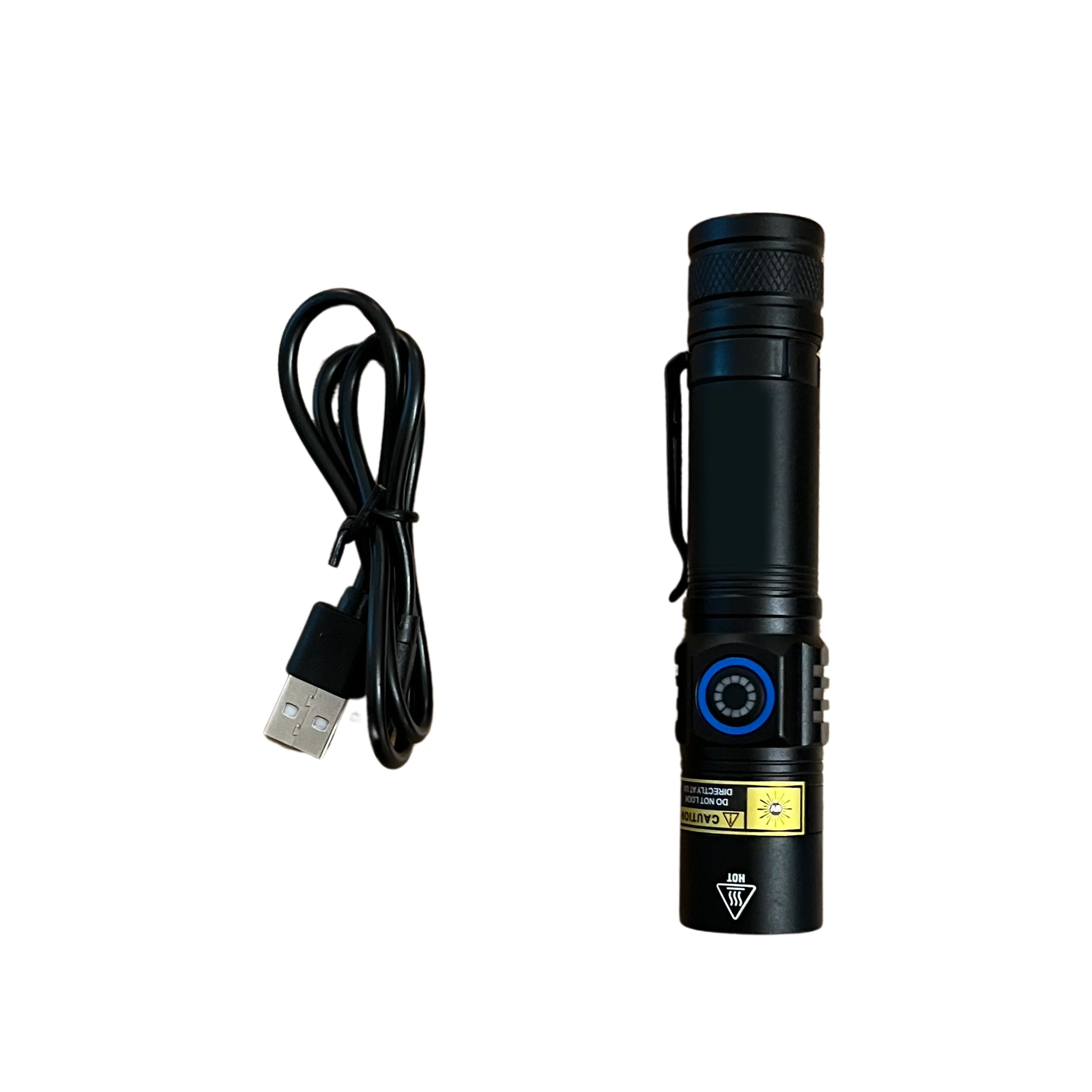
365nm UV Black Light Torch for Coffee Analysis – Rechargeable & Portable
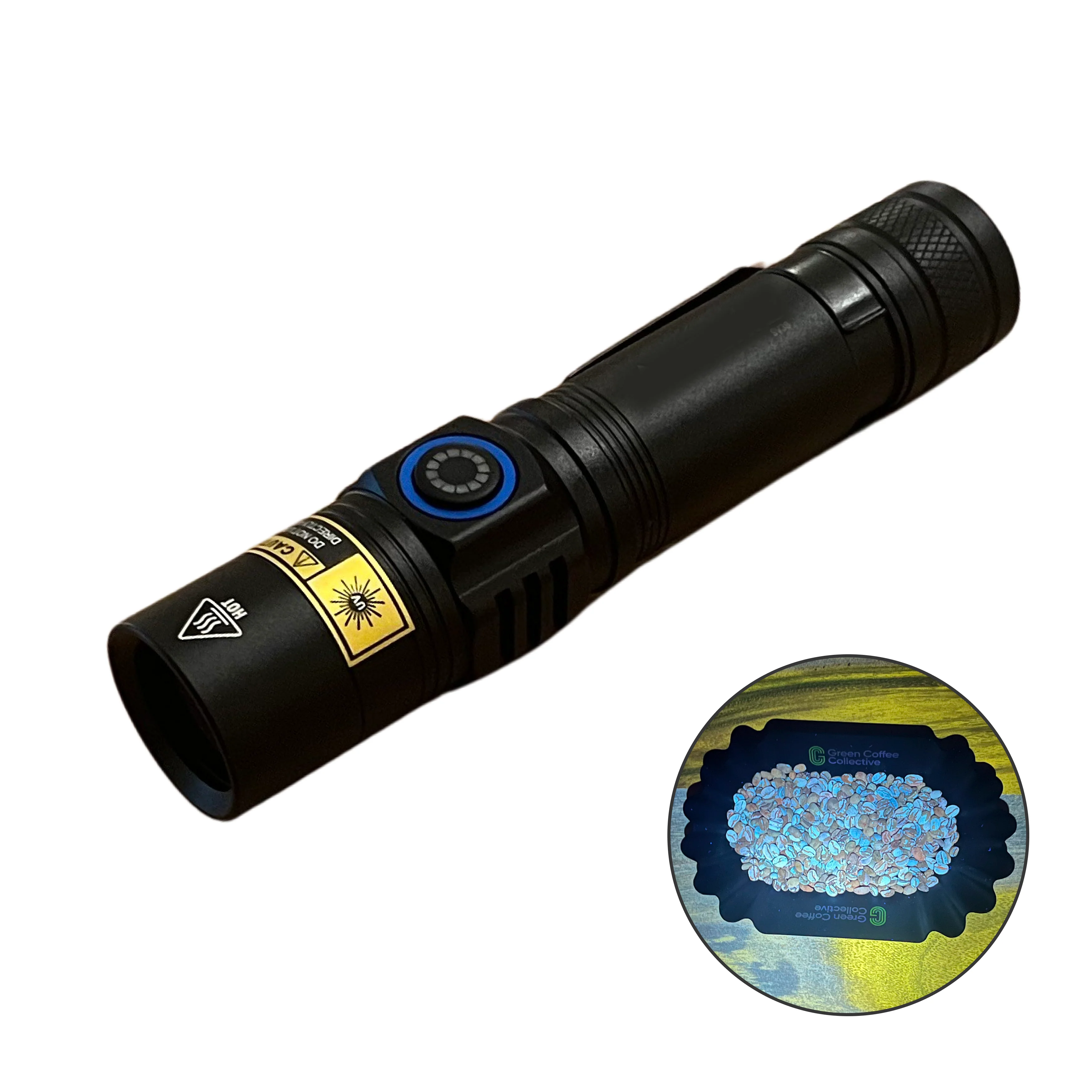
Bring lab-level insight to your cupping table. This 365 nm UV torch turns a two-minute scan into clearer buying and roasting decisions – all for less than the cost of a single sample roast gone wrong.
What you’ll spot
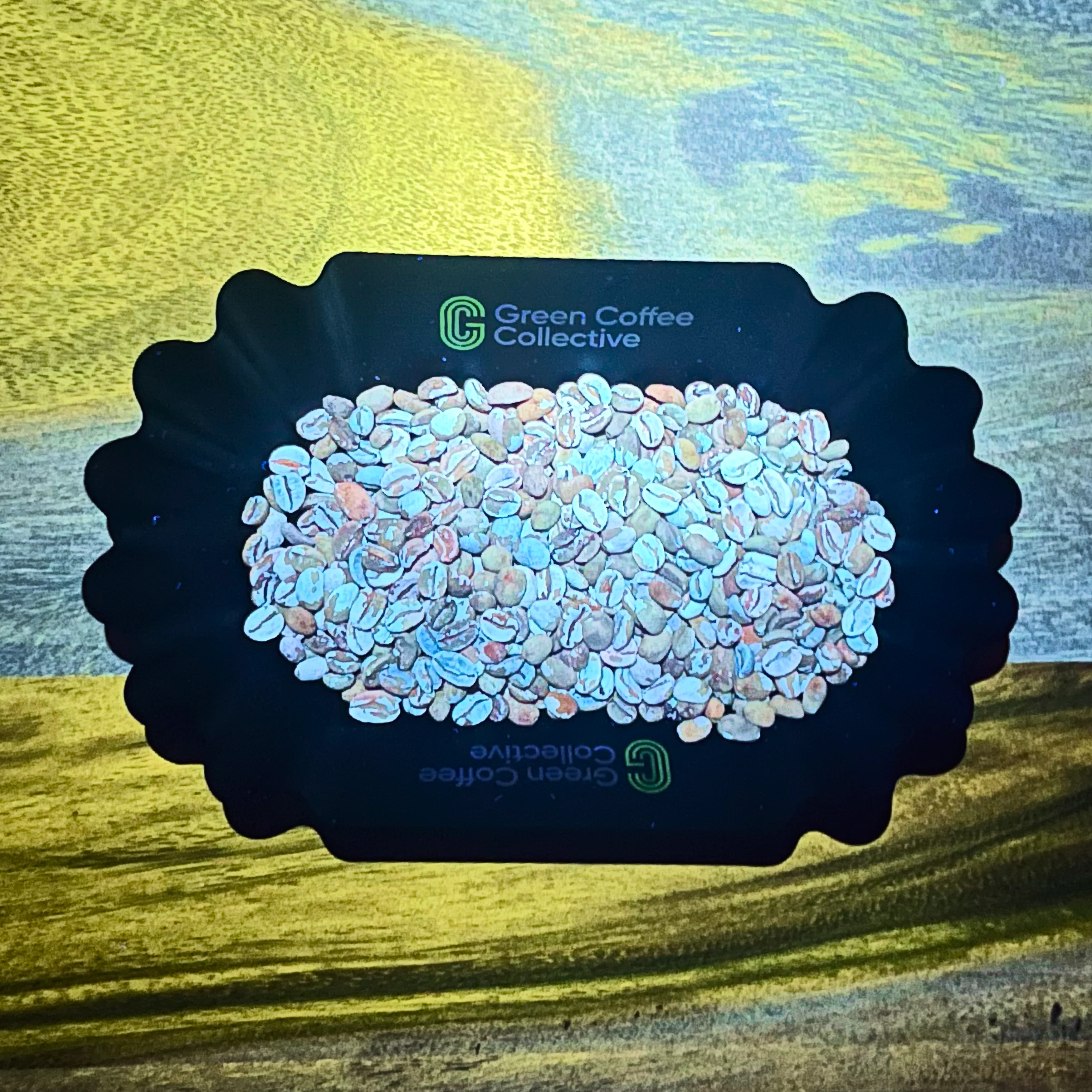
Glowing “full fluorescents” – often lower-density, lower-moisture beans that fade and stale faster. Feran’s data shows they’re about 10 % less dense and lose cup quality sooner, so roasting them first (or removing them) keeps flavour on point.
Speckled or partial fluorescents – hints of poor drying or hot fermentation.
Surface residue on roasted coffee, grinders and worktops – hygiene at a glance.
This UV torch isn’t designed to tell you if a coffee is good or bad. Fluorescence under black light highlights physical traits – like density or drying inconsistencies – that may affect how quickly a coffee loses quality, not necessarily its immediate cup score. It’s a useful tool for identifying potential shelf-life concerns or early roasting priorities, but it should always be used alongside cupping, moisture analysis, and your usual quality control practices.
Product Information
Product Information
Shipping & Returns
Shipping & Returns
Description
Bring lab-level insight to your cupping table. This 365 nm UV torch turns a two-minute scan into clearer buying and roasting decisions – all for less than the cost of a single sample roast gone wrong.
What you’ll spot
Glowing “full fluorescents” – often lower-density, lower-moisture beans that fade and stale faster. Feran’s data shows they’re about 10 % less dense and lose cup quality sooner, so roasting them first (or removing them) keeps flavour on point.
Speckled or partial fluorescents – hints of poor drying or hot fermentation.
Surface residue on roasted coffee, grinders and worktops – hygiene at a glance.
This UV torch isn’t designed to tell you if a coffee is good or bad. Fluorescence under black light highlights physical traits – like density or drying inconsistencies – that may affect how quickly a coffee loses quality, not necessarily its immediate cup score. It’s a useful tool for identifying potential shelf-life concerns or early roasting priorities, but it should always be used alongside cupping, moisture analysis, and your usual quality control practices.